ServicesCustom Glass Railings
Custom Glass Railings in Santa Ana
A glass railing keeps the edge of a balcony, deck or stair safe without boxing in the view. We measure your space, walk you through each mounting style in plain terms, and install a railing built to the guard rules that apply to your home.
What a glass railing is, and when it makes sense
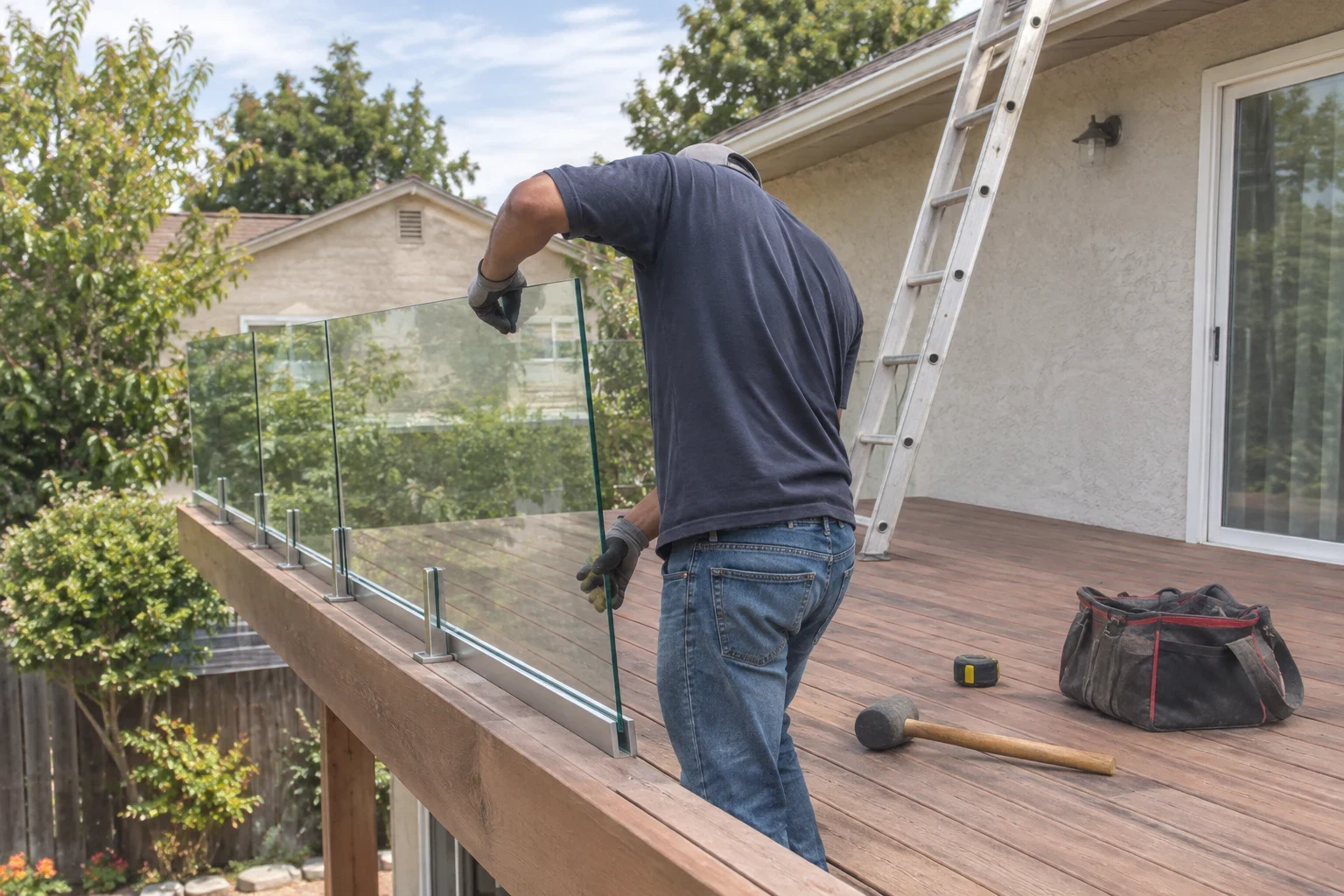
A glass railing is a guard made of tempered or laminated safety glass panels, held by a metal base channel, by posts, or by round standoffs fixed to the side of a deck or stair. It does the same job as wood or metal balusters. It just lets light and the view through.
It is the right call when an older railing blocks a view you care about, when wood pickets need repainting every few seasons, or when you are opening up a balcony and want the edge to feel finished rather than fenced. It is less suited to a spot where small children climb, unless you choose a system with a continuous top rail.
We explain each option before you decide. Glass type, hardware finish and mounting method all change how the railing looks, how it is cleaned and how it holds up over time.
What the work includes
- Site measurement
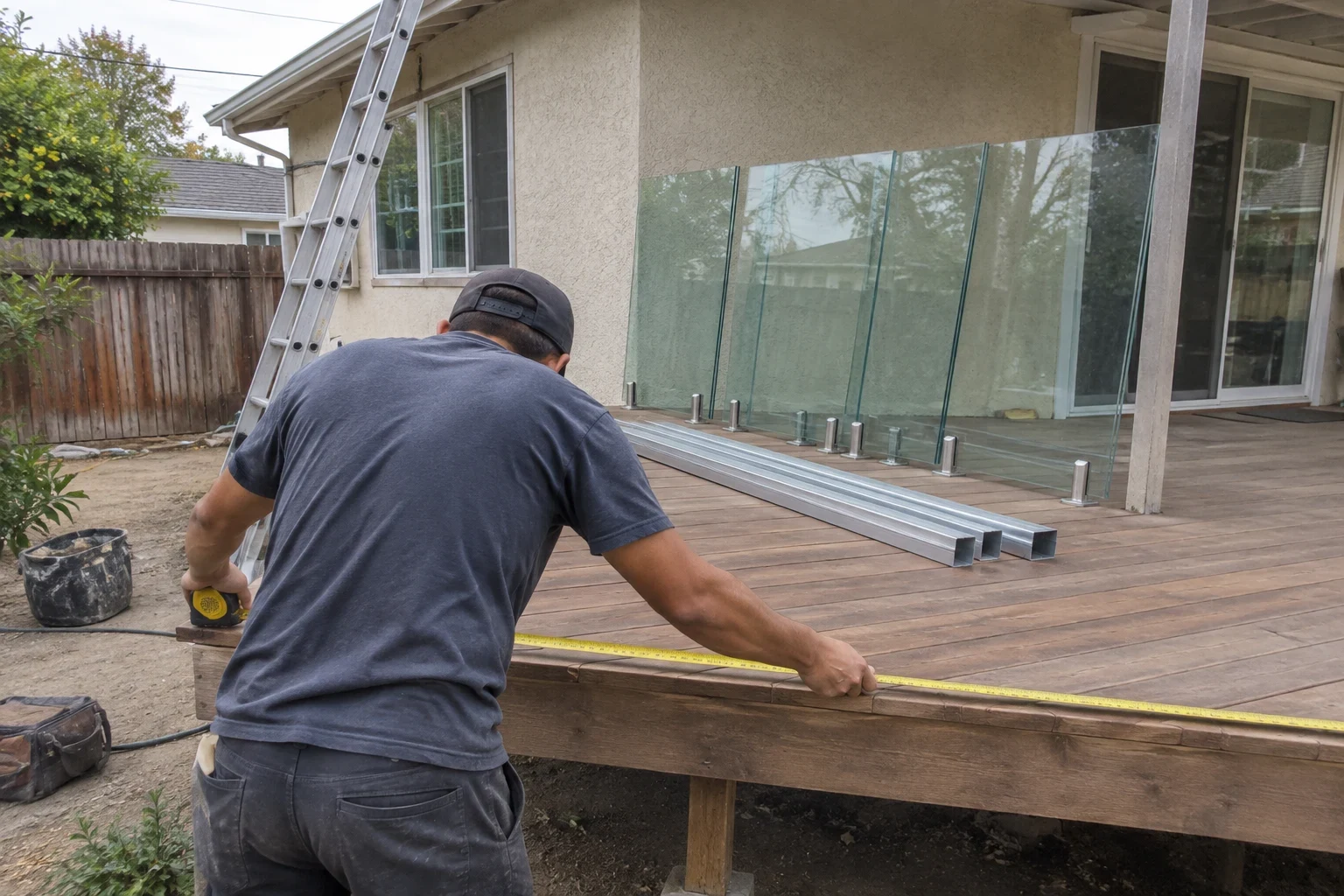
- We measure every run, corner and stair angle on site. Glass is cut and tempered to size before it arrives, so the measurements have to be exact.
- Choosing a mounting style
- Frameless base-shoe systems sit in a low aluminum channel and show almost no metal. Post-and-panel systems use slim posts with clamps. Standoff mounting fixes the glass to the face of the deck with round fittings. We show samples of each so you can see the difference.
- Glass and hardware selection
- We go over clear versus low-iron glass, tempered versus laminated, and stainless steel versus powder-coated aluminum hardware. Near the coast, marine-grade stainless resists the rust spotting that lesser steel shows in salt air.
- Removal of the old railing
- If you have an existing wood or metal railing, we take it out, haul it away and check the surface underneath before anything new is fixed to it.
- Permit handling
- When a permit is required for the guard, we pull it and schedule the inspection. You will know before work starts whether your project needs one.
- Installation and cleanup
- We set and level each panel, fit the top rail or cap if your design has one, seal the fixings and clean the glass. Fingerprints and protective film come off before we leave.
Signs it is time for a new railing
Posts that move when you lean
A loose post usually means rotted wood or failed fasteners at the base. A guard has to resist a person's weight, so movement is worth taking seriously.
Rust stains on the deck
Orange streaks below a metal railing mean the steel is breaking down at its welds and anchors, often from within.
Balusters spaced too wide
Many older railings have gaps wider than current rules allow for children. Glass closes those gaps entirely.
Constant painting
If you are sanding and repainting pickets every couple of summers, a glass system with stainless or powder-coated hardware ends that cycle.
A view you can barely see
Sometimes nothing is wrong with the railing except that it hides the garden, the pool or the hills. That is a perfectly good reason to change it.
What affects the cost of a glass railing
A glass railing is priced by the whole run rather than panel by panel, and the details often matter more than the length. Our written estimate shows glass, hardware and labor as separate lines. That makes it easy to compare two designs and see which choice changed the total.
Length and number of corners
More linear feet means more glass. Each corner, end post and change of direction also adds hardware and fitting time, so a short run with several turns can cost more than you might expect.
Mounting system
Frameless base-shoe systems need a heavier channel and solid anchoring along the full length. That usually puts them above post-and-panel systems in price.
Glass type
Low-iron glass removes the green tint you see at the edge of standard glass. Laminated glass stays in one piece if it cracks. Either choice raises the price.
Hardware finish
Marine-grade stainless costs more than standard stainless or powder-coated aluminum. Near salt air, it is the finish that keeps its look.
Stairs and surface condition
Stair panels are cut to match the slope of the steps, which takes extra work. A deck that needs added blocking, or a concrete slab that needs core drilling, adds labor as well.
How a railing project runs
- 1
Estimate at your home
We look at the balcony, deck or stair, check what the railing will be fixed to, and talk through the mounting styles that suit it. You get a written estimate that lists glass, hardware and labor separately.
- 2
Final measure and ordering
Once you choose a design, we take final measurements and order the glass. Tempered panels cannot be trimmed afterward, so this step is done carefully.
- 3
Preparing the surface
We remove the old railing and confirm the deck framing or concrete can hold the new anchors. If blocking or reinforcement is needed, we tell you before adding it.
- 4
Installation day
We fit the base channel or posts, set each panel with setting blocks and gaskets, align the top edge and tighten every fitting. Most single runs are finished in a day, and stairs or long runs may take longer.
- 5
Walkthrough
We go over the finished railing with you, show you how to clean the glass and hardware, and leave the area swept.
Glass railing questions
Is a glass railing actually safe?
Yes, when it uses safety glass and is installed to the guard rules for your home. Tempered glass breaks into small, blunt pieces instead of sharp shards. Laminated glass has a clear plastic layer sandwiched inside that holds the panel together even if it cracks. We explain which suits your spot and why.
How hard is it to keep clean?
Rain and sprinkler water leave spots, much like on a window. A wash with a glass cleaner or diluted vinegar every few weeks keeps it clear. Some homeowners add a water-repellent coating, which makes rinsing easier.
Do I need a permit for a new railing?
Often, yes, especially on a raised deck or balcony where the railing serves as a required guard. We check what applies to your home, pull the permit when needed and arrange the inspection.
Can glass go on my existing wood deck?
Usually. The key question is whether the framing can carry the anchors, so we inspect the joists and rim board before recommending a system. If reinforcement is needed, we show you where and include it in the estimate.
Can you replace the slider onto the balcony at the same time?
We can. Many homeowners pair a new railing with our sliding door replacement or multi-folding doors so the opening and the edge are finished together. We plan both on one visit.
See the options in person
We bring glass and hardware samples to your home, measure the space and explain what each choice means. Free in-home estimates with no sales pressure or obligation.