ServicesWindow Installation
Window Installation in Santa Ana
When a wall is open, a room is being added or an opening is changing size, the window goes in differently than a simple swap. We set it into the framing, flash it against water and finish the stucco or trim so it looks like it was always there.
What window installation means, and when it fits
Window installation is the work of putting a window into a rough opening: bare framing, with the wall's weather barrier exposed. That happens in additions, ADUs, kitchen and bath remodels, or when you want a wider or taller opening than the one you have. It is different from window replacement, where a new unit goes into an existing frame and the wall stays closed.
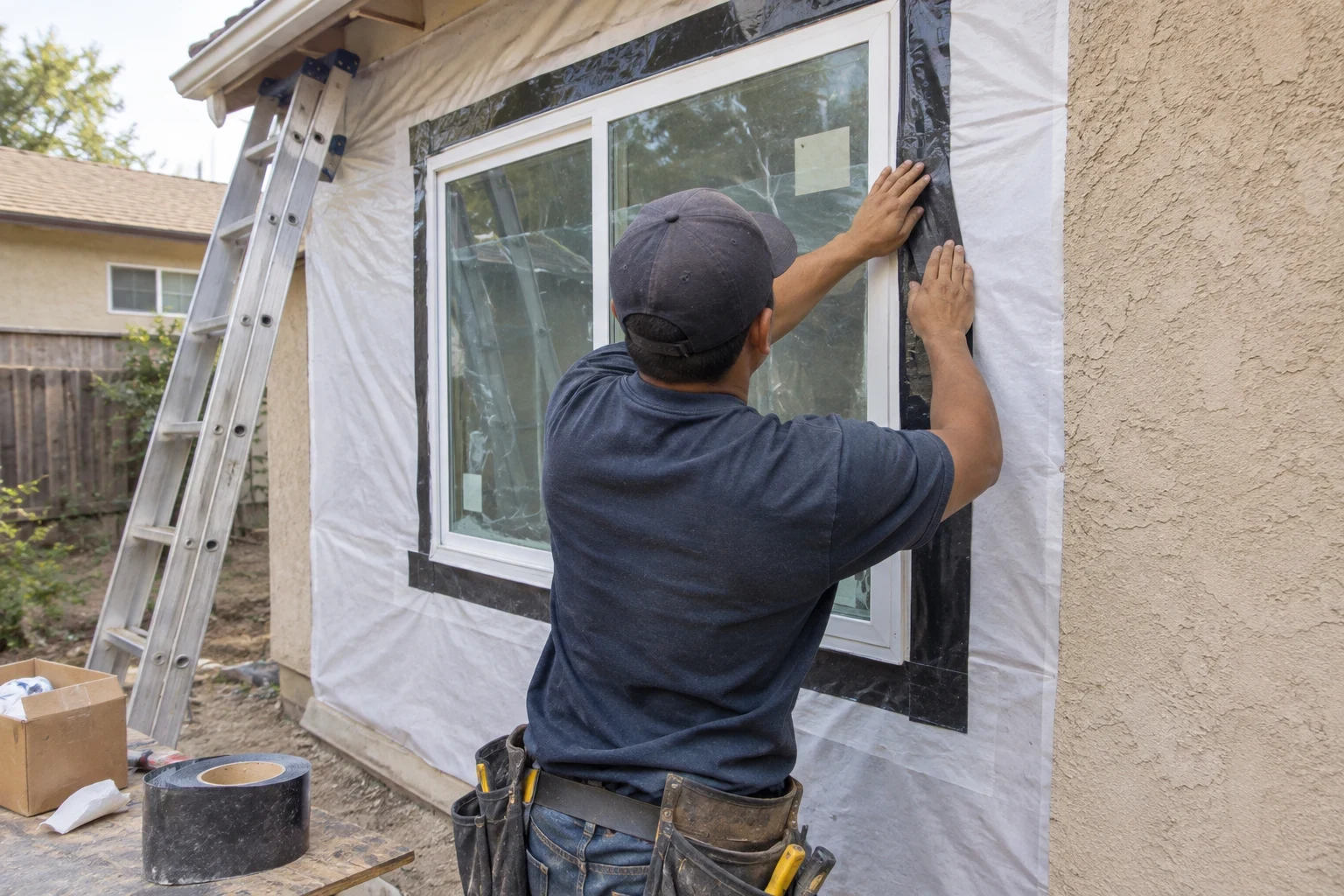
Most installation work uses a nail-fin window, often called new-construction style. The fin is a thin flange around the frame that fastens to the studs and laps under the building paper, so water running down the wall is carried past the window instead of behind it. Done in the right order, that detail does more to keep a wall dry than any caulk bead.
Before you choose, we explain the options in plain terms: frame material, glass package and operating style, and what each one means for cleaning, ventilation and noise. You decide with the tradeoffs in front of you.
Every installation covers these steps
- Sizing to the framing
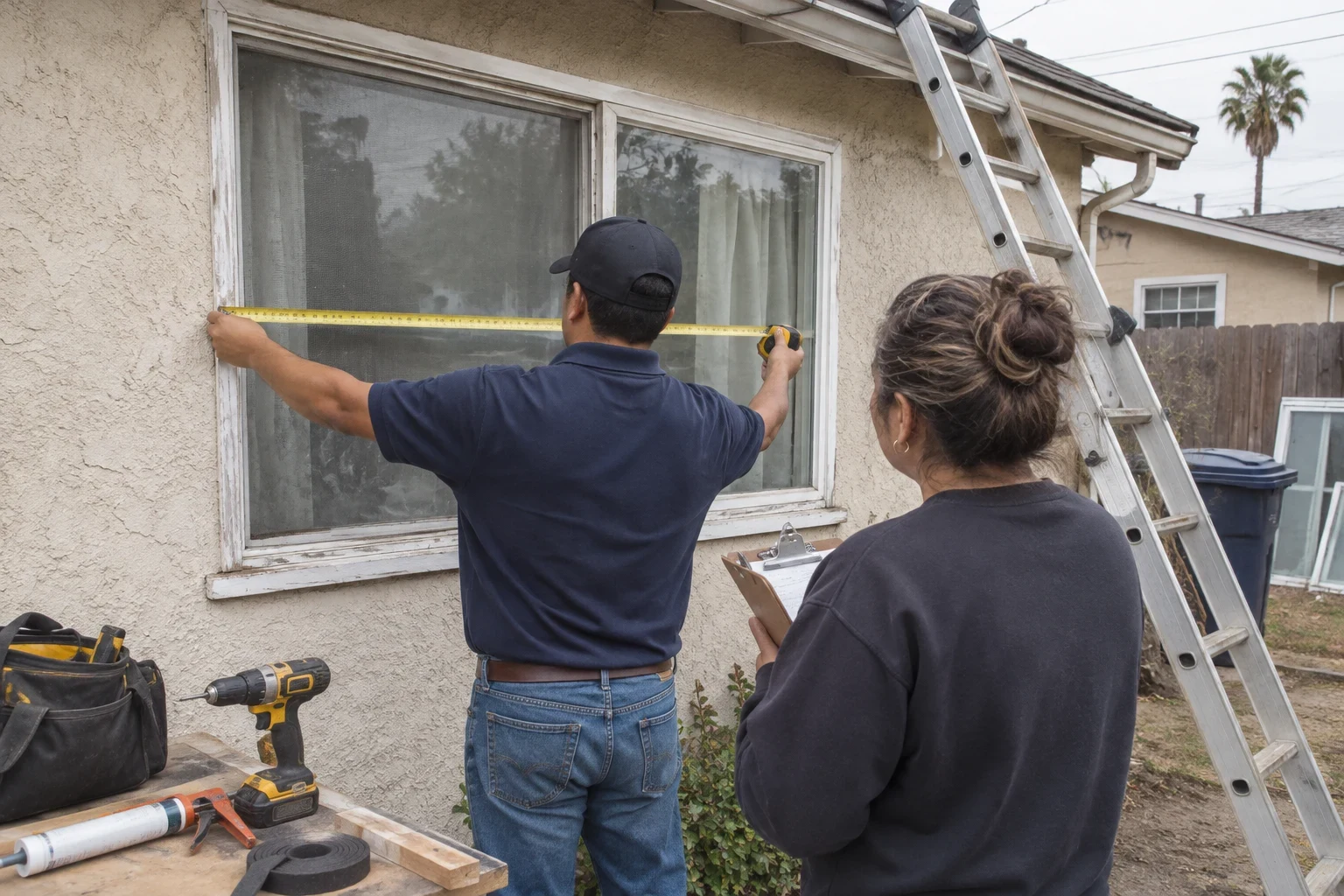
- Before anything is ordered, we take several readings across the bare opening and confirm it is square and level. The unit is then built to leave a proper shim gap on every side, which is what lets a window open and close smoothly for years.
- Sill pan and flashing
- A sloped pan is fitted at the bottom of the opening first. The window follows, then flashing tape lapped shingle-style over the fins, with the head flashing tucked under the paper above so any water behind the stucco drains outward.
- Plumb, square and fastened
- Shims bring the frame true before a single fastener goes in. Then we confirm each sash slides or cranks evenly and locks without force.
- Foam and air sealing
- Low-expansion foam rated for windows fills the space between frame and studs. It stops drafts without pushing the frame out of shape.
- Finish inside and out
- Outside, we patch the stucco around the new unit or work alongside your plasterer, depending on the project. Inside, returns or trim are finished so the opening looks intentional.
- Leaving the site clean
- Boxes, cutoffs and job debris go out with our crew when we finish.
Signs installation is the right call
You are adding space
An addition, ADU or enclosed patio needs windows set into new framing. That is installation work from the start.
A remodel is changing an opening
Widening a kitchen window over the sink or adding light to a dark hallway means reframing, and the new window goes in with the wall open.
A bedroom window is too small to exit
Bedrooms need a window large enough to climb out of in a fire. If yours falls short, enlarging the opening is an installation job.
Water stains under an old window
Stained drywall, swollen sills or soft framing below a window can mean the original flashing failed. Opening the wall lets the damaged section be addressed and the new window flashed correctly.
Stucco is already coming off
If the exterior around a window is being removed for other work, a full installation costs little extra effort and gives you a properly sealed opening.
What moves the cost
Two installation jobs with the same number of windows can price quite differently. The window itself is one part; the opening, the wall finish and the glass make up the rest. Your written estimate breaks these out so you can see where the money goes.
Size and operating style
Larger units cost more, and casements, awnings and tilt-turn styles carry more hardware than sliders or fixed picture windows.
Frame material
Vinyl is the most economical. Fiberglass and wood-clad frames cost more and offer slimmer profiles or a painted wood interior.
Glass package
Low-E coatings, laminated glass for sound and tempered glass where code requires it near doors, tubs or floors all affect price. California energy rules also set minimum performance for new windows.
Wall finish and access
Stucco patching, siding repair and second-story openings that need ladders or scaffolding add labor.
How an installation day runs
- 1
Free in-home estimate
We look at the openings, measure, and walk you through frame and glass choices. You get a written estimate that lists each window, with no pressure to sign that day.
- 2
Permit and ordering
When the work needs a permit, we pull it. Windows are ordered to size, and we schedule the install once they arrive and are checked for damage.
- 3
Protecting your home
Floors along our path get covered, furniture near the openings is moved or draped, and we keep dust contained to the work area.
- 4
Installing and sealing
Each window is set, flashed, shimmed, fastened and foamed in order. We test every sash before moving to the next opening.
- 5
Walkthrough
We show you how each window opens, locks and tilts for cleaning, and point out anything the inspector will want to see.
Window installation questions
How is installation different from replacement?
Installation sets a window into an open, framed wall and ties it into the weather barrier. Replacement puts a new window into an existing frame or opening with the wall left closed. If you are not remodeling or adding space, our window replacement or window retrofitting pages likely fit better.
Do I need a permit for new windows?
New openings, enlarged openings and most additions do. When a permit applies, we pull it and schedule the inspection. We will tell you at the estimate which way your project falls.
Can you match the stucco around a new window?
We patch the stucco around each opening so it is sealed and sound. Matching texture is very close on most homes; matching color usually means painting the wall section, which we will discuss with you up front.
How long does installation take?
A single opening that is already framed often takes a few hours. A full addition with several windows may take a day or two, depending on finish work.
Will you work with my general contractor?
Yes. On remodels and additions we coordinate timing so the windows go in after framing and paper and before stucco or drywall, which is the order that keeps the flashing correct.
Planning an addition or a new opening?
Tell us what you are building and we will come measure, explain your window options in plain terms and leave you a written estimate. Homeowners in Santa Ana, Tustin, Orange and nearby cities can get on the schedule with one call.