ServicesWindow Retrofitting
Window Retrofitting in Santa Ana
A retrofit swaps your old windows for new energy-efficient ones without tearing into the wall. The stucco outside and the drywall inside stay put, so there is no patching and very little mess. We explain both retrofit styles plainly, so you can choose with confidence.
What a retrofit is, in plain terms
A retrofit replaces the window without disturbing the wall around it. We remove the old glass and sashes, deal with the old frame, and set a new vinyl window into the existing opening. Your stucco and interior walls are left as they are, so there is no wall repair or repainting afterward.
It suits most Santa Ana homes with original aluminum windows from the 1950s through the 1980s, where the frame sits in stucco and the opening is still square and dry. It is a poor fit for openings with rot, past leaks, or a size change you want to make. For those, full-frame window installation is the honest answer, and we will tell you which one your home needs.
There are two common ways to do a retrofit, and the difference decides how much glass you keep. Both are described below.
What the retrofit work includes
- 01
Flush-fin frames for stucco
On most stucco homes we cut out the old aluminum frame and install a new window with a flat exterior fin that laps over the stucco edge. The fin hides the cut line and keeps the glass close to its original size. From the street, it reads as a clean, finished frame.
- 02
Block-frame inserts
Where the old frame is solid and the exterior trim is worth keeping, the new window can sit inside the existing frame. You give up a little glass on each side, so we show you the difference before you decide.
- 03
Setting and sealing
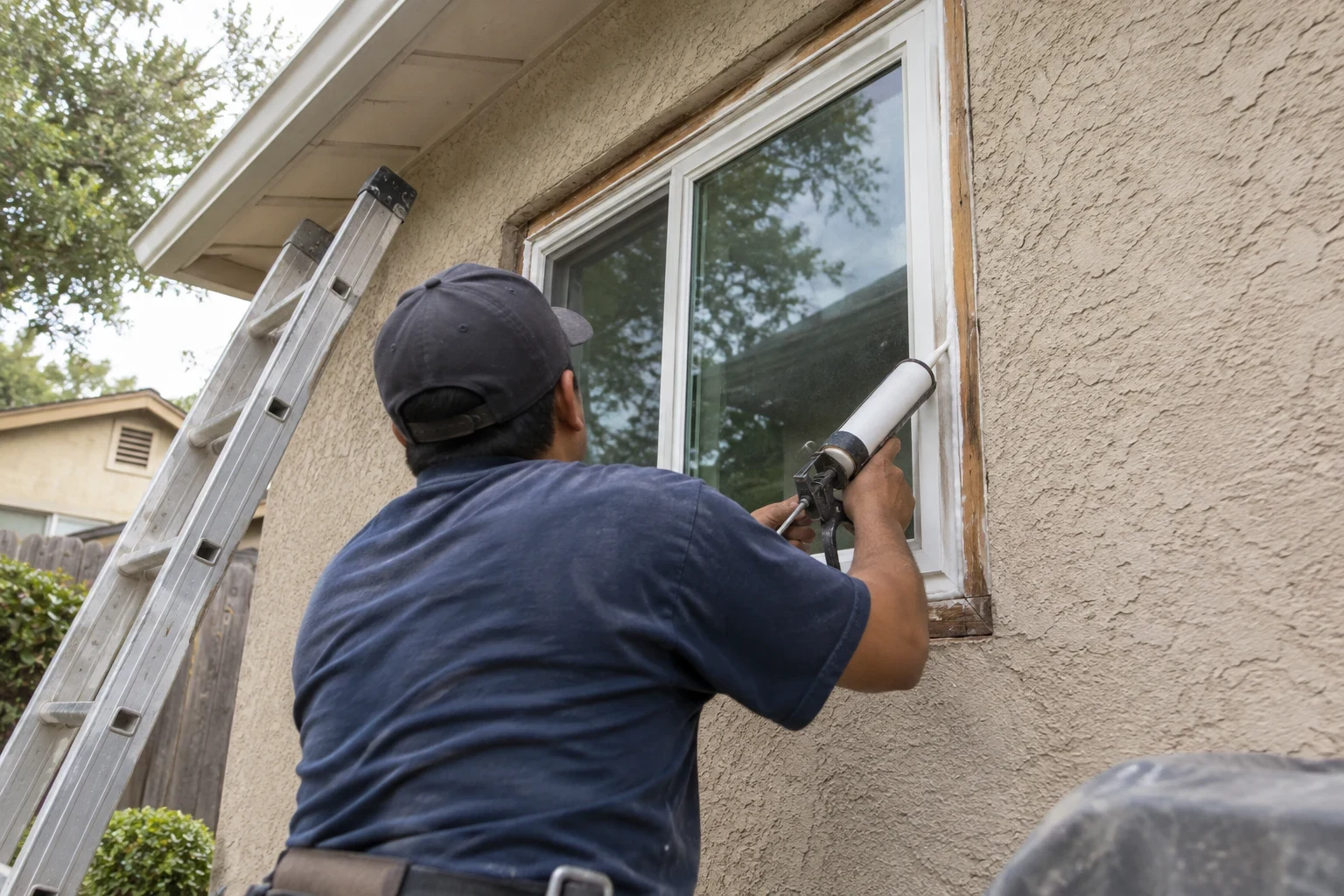
Each window is set level and square, shimmed and fastened. Gaps are filled with low-expansion foam that will not bow the frame, and the exterior is sealed to the stucco with a color-matched sealant.
- 04
A finished interior edge
Inside, we fit trim or caulk to the existing drywall return so the edge looks deliberate rather than patched. Sills are left clean and ready for paint if you want it.
- 05
Haul-away and cleanup
Old frames and glass leave with us. We lay drop cloths at each opening, vacuum as we go, and walk through the house with you before we pack up.
Questions about Window Retrofitting?
Call(714) 908-4904Signs your windows are ready for a retrofit
Sliders that drag or jump the track
Aluminum tracks wear down and rollers flatten. Once the track itself is worn, the sash keeps dragging or lifting out no matter how often it is cleaned.
Condensation and black corners
Single-pane aluminum passes cold straight through. Morning moisture on the frame feeds the dark mildew you see along sills and in corners.
Rooms that heat up by mid-afternoon
A west-facing bedroom that turns warm even in spring is losing heat control through the glass. Low-E coated glass in a new window blocks much of that solar heat.
Traffic noise you hear clearly
Thin single glass lets street and neighbor noise through easily. Dual-pane glass with a sealed gap quiets a room noticeably.
Fogged dual-pane glass
If an earlier set of dual-pane windows has clouded between the panes, the seal has failed. On aging frames, retrofitting the whole unit is usually the better use of your money.
How a retrofit job runs
- 1
Measuring at the estimate
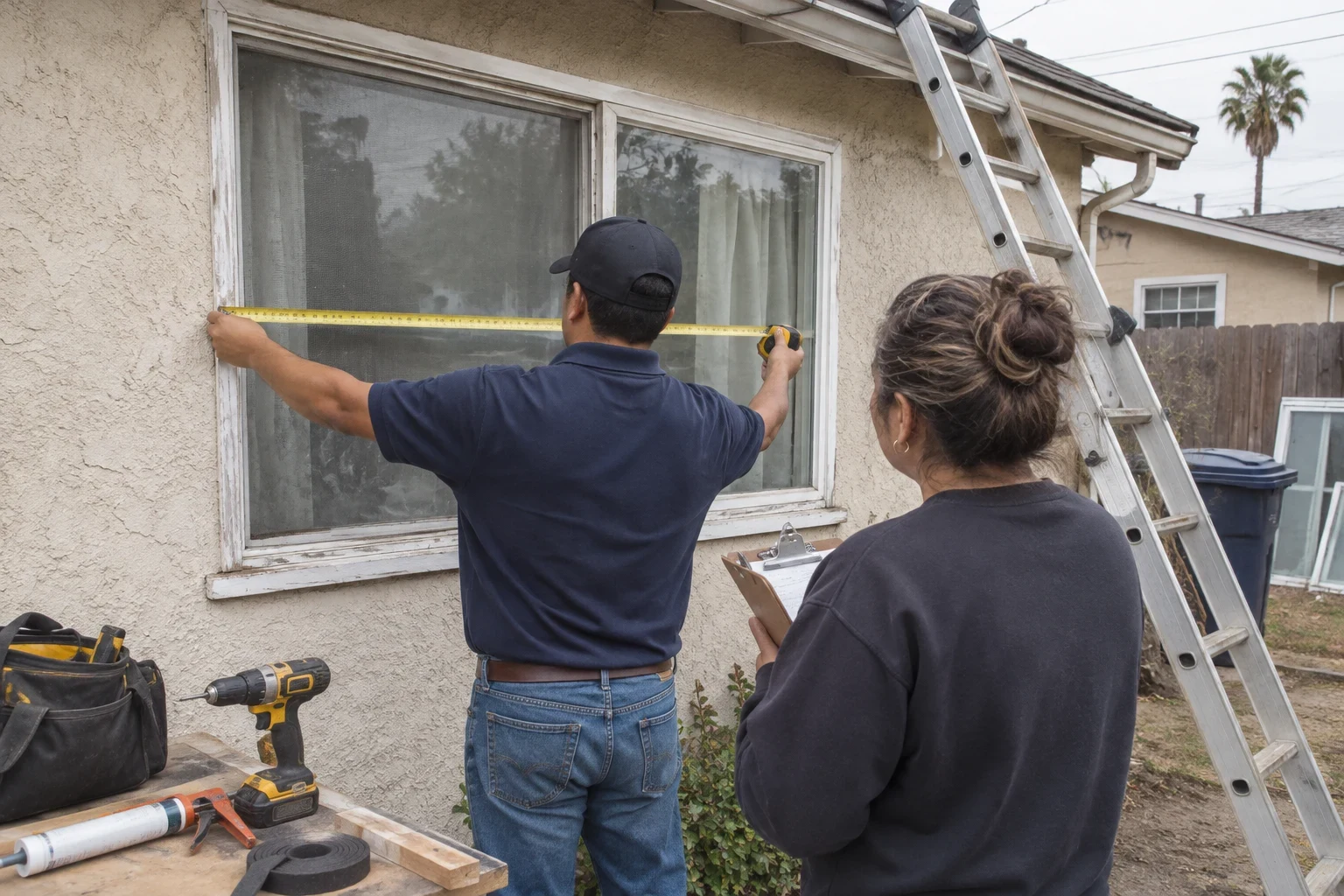
During the free in-home estimate we measure each opening, check that it is square, and look for soft framing or signs of old leaks. You get a written estimate listing each window, its frame style and its glass.
- 2
Ordering to size
Retrofit windows are built to the measured opening. We confirm final measurements before ordering and set your install date once the windows are ready.
- 3
Install day
Floors and furniture near each opening get covered before any tools come out. We work one opening at a time, with the new unit unpacked and prepped before the old one is removed, which keeps every room sealed against dust and weather through the day. Most homes are finished in a day; larger ones may take two.
- 4
Walkthrough together
We open, close and lock every window with you, show you how the sashes tilt or lift out for cleaning, and take the old frames away.
What moves the price of a retrofit
A retrofit usually costs less than full-frame work because the wall around each window stays intact. The final number depends on the windows you choose and the openings they go into. Your written estimate lists each window on its own line, so you can see exactly where the cost comes from and adjust before anything is ordered.
- Number and size of openings
- Large sliders and picture windows take more material and handling. Several windows on one order are more efficient to measure, build and install than one at a time.
- Frame style and shape
- Flush-fin frames and block inserts are priced differently. Arches, bays and other specialty shapes add cost.
- Glass package
- Low-E coatings, argon fill, laminated glass for sound, and obscure glass for bathrooms each change the price.
- Color and finish
- White vinyl is the standard. Tan, dark exteriors or wood-look interiors cost more and can take longer to build.
- Condition of the opening
- If we find soft framing or old water damage, we show you before any extra work is done, and you decide.
Window retrofit questions
Will the stucco around my windows be damaged?
No cutting into the stucco wall is needed. The old frame is cut out along its own edge, and the new frame's fin covers that line. The paint on the wall around the window is left alone.
Will I lose glass area with a retrofit?
With a flush-fin frame, very little, since the new window takes the place of the old frame. A block-frame insert sits inside the old frame, so it gives up some glass on every side. We show you both on your actual windows before you choose.
Is a retrofit as good as a full-frame installation?
For a sound, dry opening, yes. The window itself can be the same product; the difference is how it attaches to the wall. Full-frame is the right call when the opening is damaged, needs a new size, or the old nailing fin has been leaking.
Do I need a permit for retrofit windows?
Replacement windows in California must meet the state energy code, and many cities require a permit for window changes. We check what applies to your home and handle the permit when one is needed.
Do I need to be home for the whole install?
Not for all of it. We like to meet an adult at the start of the day to confirm which window goes where, and again at the end for the final walkthrough. In between, plenty of people settle into a quiet room or head out for a few hours while the crew moves through the house.
Can I retrofit a few windows now and the rest later?
Yes. We note the exact product, color and glass on your order so later windows match the first set.
See which retrofit fits your windows
We'll measure your openings, show you both frame styles side by side, and explain the glass options in plain terms. The estimate happens in your home, with no sales pressure or obligation.