ServicesWindow Replacement
Window Replacement in Santa Ana
Old windows that fog up, stick in the track or let the afternoon heat pour in can be swapped for new units made to fit each opening and sealed properly to your walls. We explain frame materials, glass choices and installation methods in plain terms first, so you pick with confidence.
What window replacement actually means
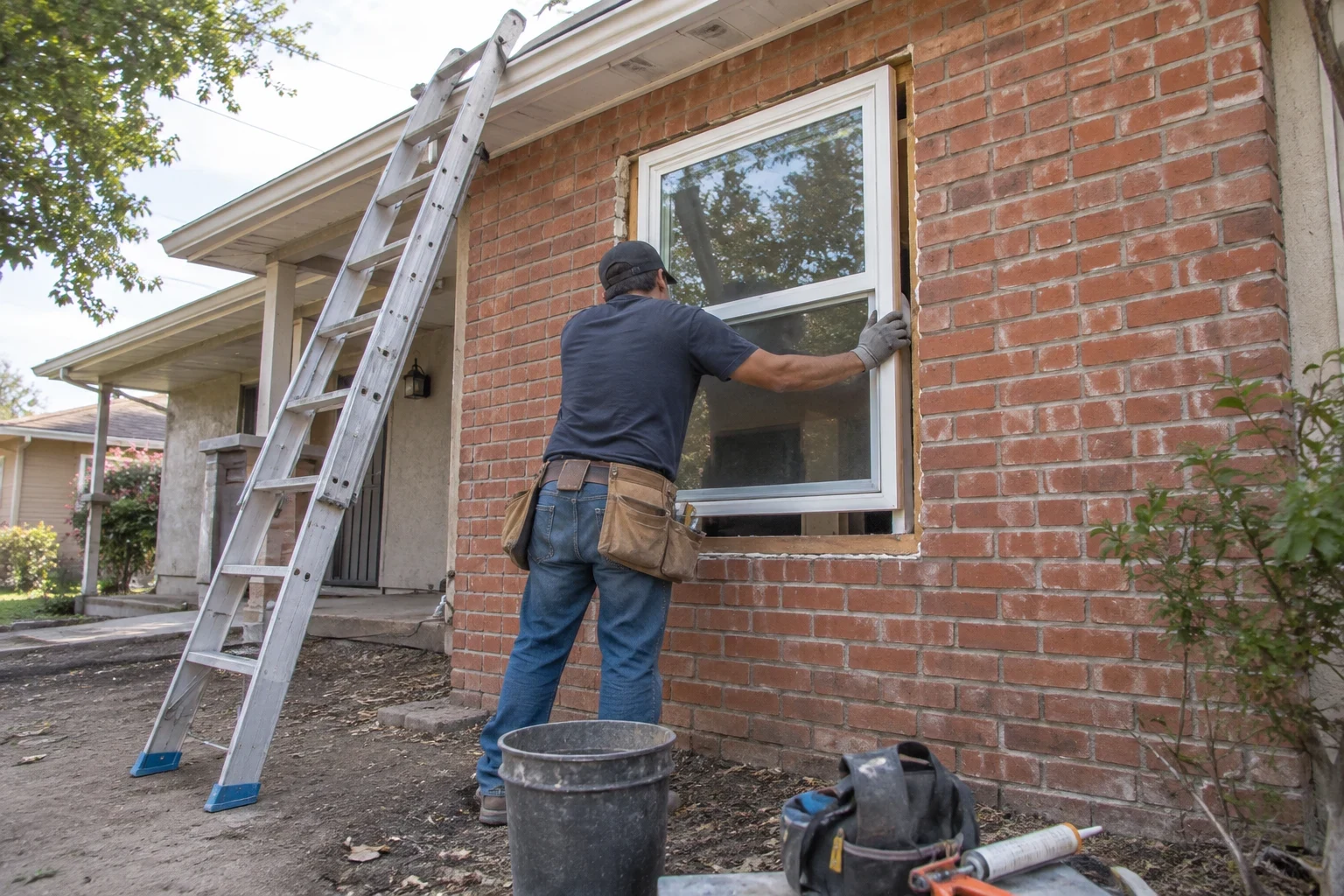
Window replacement takes out an old window and puts a complete new unit in the opening: new frame, new sashes, new glass and new seals. It is the right step when a window has reached the end of its working life, when the glass seal has failed or the frame no longer closes tight.
There are two ways to do it. A retrofit install fits the new window inside the existing frame, so your stucco and interior trim stay as they are. A full-frame install removes everything down to the wood opening, which lets us check the framing and add new flashing but means patching the finish around it. We explain which one your walls call for, and why, before you decide. Our Window Retrofitting page goes into that method in more detail.
Many homes around Santa Ana still have their original single-pane aluminum sliders. Those frames pass heat straight through and the thin glass lets in street noise, so moving to a dual-pane window is usually the change you notice first.
Every step of the job, covered
- Precise sizing for each window
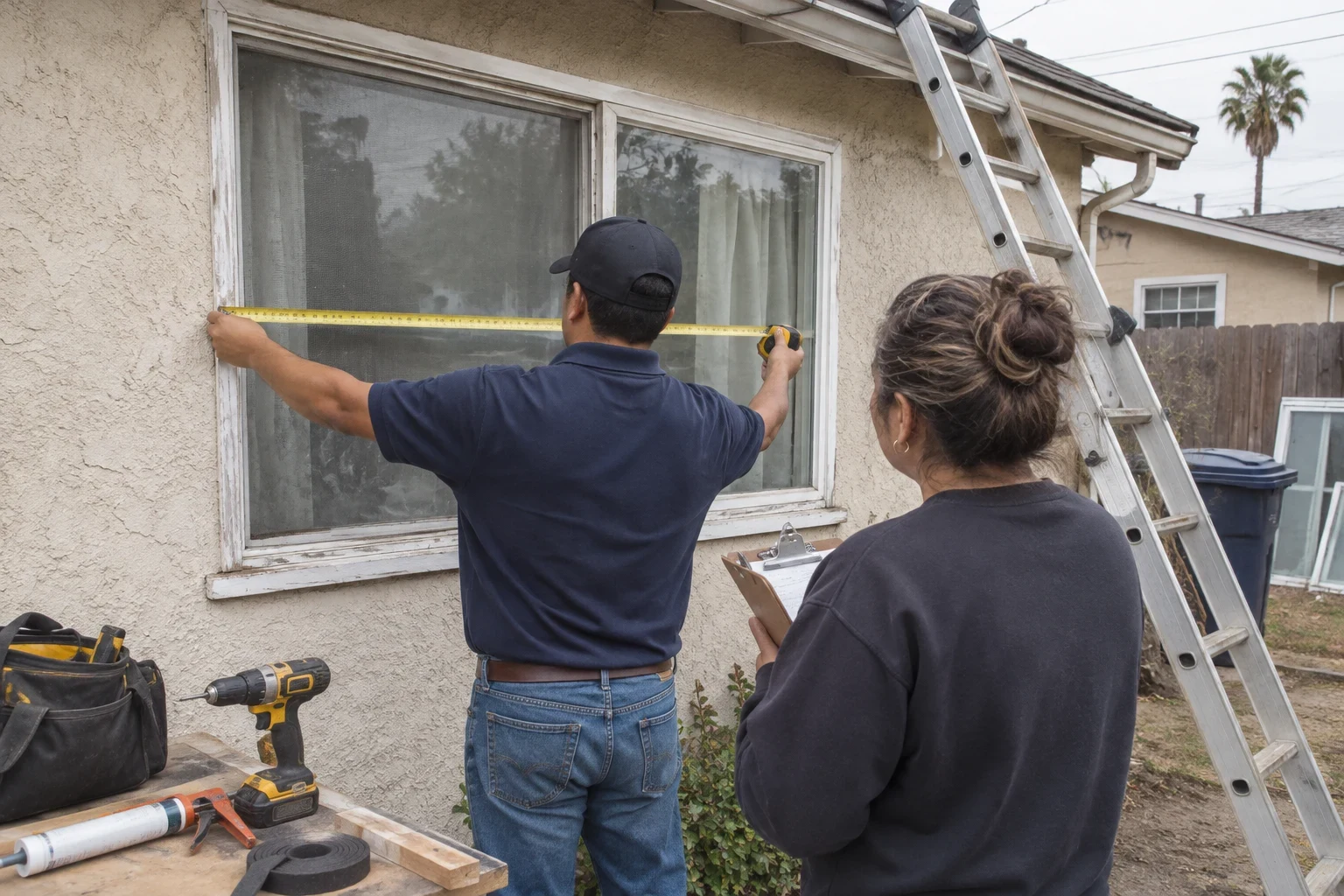
- Older openings are seldom perfectly square, so we take measurements at several points across the width and height of every window. Your new units are made to those figures rather than to a stock size that comes close.
- Frame material, side by side
- Vinyl is the most common choice. It insulates well, never needs paint and stands up to strong sun. Fiberglass costs more, moves less with heat and allows slimmer frames, and we bring corner samples of both so you can see and feel the finish.
- The right glass package
- Our standard is dual-pane glass with a low-E coating and argon fill. Laminated glass quiets a bedroom that faces a busy road, and tempered glass goes wherever code calls for it, such as beside doors, near tubs and low to the floor.
- Tidy removal
- Before any frame comes out, we cover the floors and furniture near the window. The old sashes and frames are taken out cleanly and hauled away with us.
- Sealing and finish work
- Each new window is shimmed level, fastened and insulated with low-expansion foam that will not bow the frame. Outside we use a sealant made for stucco, and inside we finish with new trim or a neat caulk line to your existing returns.
Signs your windows are ready to be replaced
Fog trapped between the panes
A cloudy haze you cannot wipe away means the seal between the two panes has failed and the insulating gas has escaped. The glass now insulates little better than a single pane.
Sliders that stick or jump the track
Worn aluminum tracks and flattened rollers make a window drag, rattle or lift out of place. On older frames the wear usually runs through the whole unit.
Rooms that bake in the afternoon
Clear, uncoated glass lets heat and UV pour in. If one room is always warmer, or rugs and furniture near the window have faded, the glass is doing very little to help.
Drafts, noise and whistling
Shrunken weatherstripping and loose sashes let air and sound slip through. You may feel it on a windy evening or hear traffic clearly with the window shut.
Pitted frames or water at the sill
White powder and pitting on aluminum, or water stains on the sill and wall below, point to failing seals. Left alone, moisture can damage the wood framing behind the stucco.
How a replacement project runs
- 1
Free in-home estimate
We look at each window, take measurements and talk through your options with samples in hand. You receive a written estimate that prices every window separately, with no sales pressure and no obligation.
- 2
Ordering and scheduling
After you approve the estimate, your windows are built to our measurements. Once they arrive, we call you to choose an installation date that works for your household.
- 3
Installation day
We set up drop cloths and protection first, then work through the house window by window, closing each opening before moving to the next. A small job is often done in one day, and a larger home may take a bit longer.
- 4
Walkthrough and cleanup
Together we open, close and lock every new window, and we show you the weep holes that let rainwater drain out. We clean the glass and take all packaging and old windows away with us.
What affects the price
Each window is priced on its own and then added up, so your estimate shows exactly where the money goes. Nothing is bundled into a single vague number. These are the things that move it most.
- Size and style
- A large picture window or a tall single-hung costs more than a small bathroom slider. Specialty shapes such as arches take extra work to build.
- Frame material
- Vinyl is the most economical frame. Fiberglass sits higher, in exchange for slimmer lines and less movement with heat.
- Glass upgrades
- Standard low-E dual-pane glass is included. Laminated glass for sound, tempered glass where code requires it, or obscure glass for privacy each add to the cost.
- Installation method
- Retrofit installs are usually the simpler path. Full-frame work adds labor for removing the old frame, new flashing and patching stucco or drywall.
- Access and quantity
- Second-story windows and tight side yards take more time to reach. Replacing several windows at once usually costs less per window than doing them one at a time.
Window replacement questions
Something not covered here? (714) 908-4904
Do you have a set price per window?
We offer window replacement for only $495 per window with free installation (minimum purchase of 4 windows per order; some glass size and product restrictions apply). During your estimate we point out which of your windows qualify and which need a different size or product, so the numbers are clear from the start.
Should I choose a retrofit or full-frame install?
When your existing frames are sound and square, a retrofit install is usually the sensible choice because your stucco and interior trim stay untouched. If we find rot, water damage or an opening that is well out of square, full-frame is the better long-term answer. We show you what we found and leave the decision with you.
Is vinyl good enough, or should I pay for fiberglass?
For most homes, a well-built vinyl window insulates well and lasts many years without paint. Fiberglass earns its cost on large openings, dark frame colors or walls that take strong afternoon sun, where its stability matters. We explain the tradeoff honestly and do not push the pricier frame.
Will I need a permit?
Replacement windows in California must meet Title 24 energy standards, and many cities require a permit for the work. We check what applies to your address and take care of the permit when one is needed.
Will the work damage my stucco or interior walls?
With a retrofit install, the old frame stays in the wall, so the stucco outside and the drywall inside are left as they are. Full-frame work does disturb the finish around the opening, and we patch it as part of the job. We tell you which method your home needs before anything is ordered, so you know what to expect.
See your options before you decide
We bring frame and glass samples to your home, measure every window and explain each choice in plain terms. The estimate is free, with no sales pressure or obligation.